How High Connectivity Infrastructure Boosts Ranking Performance
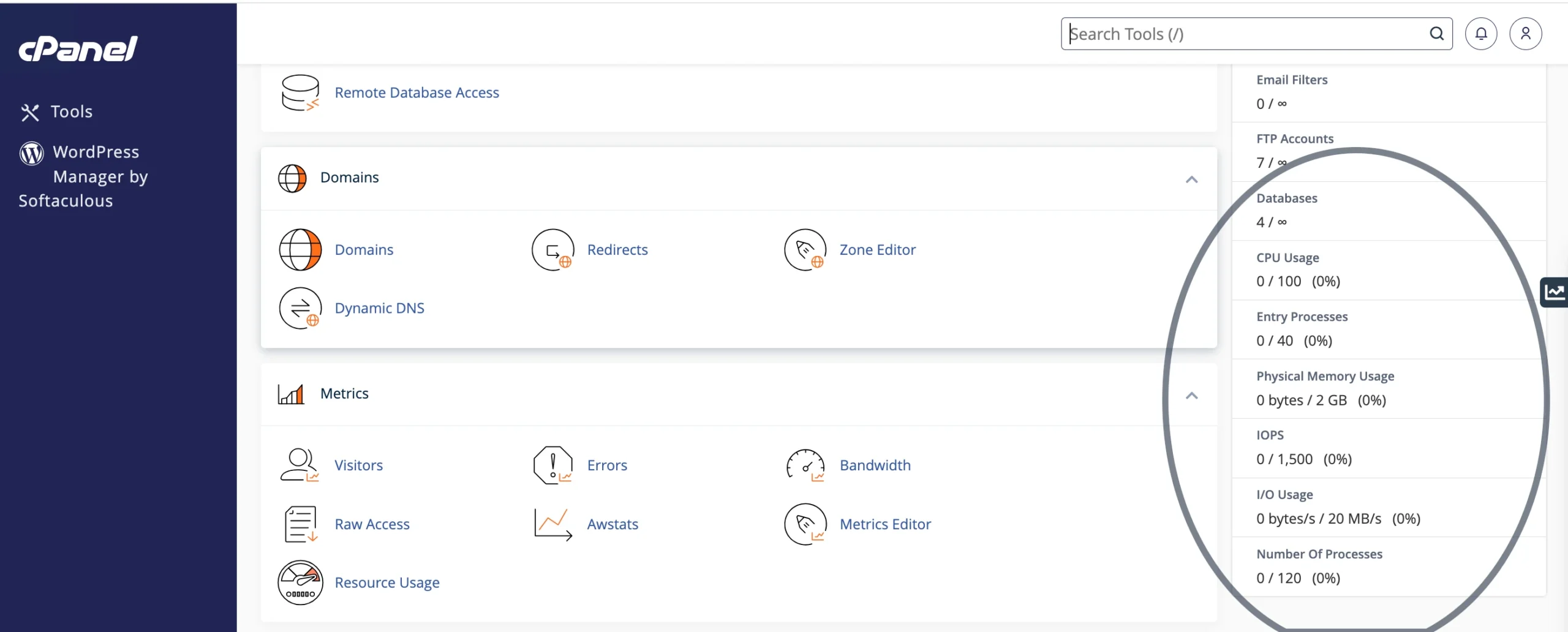
We will discuss what RAM and CPU cores are, how they work, and why they matter for your WordPress site. We will likewise provide you some examples of WordPress sites that need high RAM and CPU resources, and how to scale them appropriately. Finally, we will share some pointers and best practices to improve your website's performance, and avoid losing resources.
Let's see what they do and why they matter. RAM means Random Access Memory, and is the short-term storage area that your WordPress site utilizes to load and procedure data. Every time somebody visits your website, WordPress requires to access the database, load the files, and execute the code.
The more RAM you have, the more data your website can manage at when. This means your site can load faster, deal with more traffic, and run more plugins without crashing or slowing down.
Each time somebody check outs your site, WordPress needs to carry out some reasoning and estimations to generate the output. It needs to check the user's permissions, use the theme's settings, run the plugins' functions, and so on. All these operations require a CPU to process the commands. The CPU is determined in the variety of cores.
Powering Search Infrastructure through Advanced Processing
The more RAM and CPU cores you have, the more procedures you can run all at once, and the much faster your website can react to visitors. If your site gets a lot of traffic or runs complicated tasks, it might require more RAM and CPU resources than are readily available on your existing hosting plan.

That's why you require to pick a hosting strategy that supplies sufficient RAM and CPU resources for your WordPress website. You likewise need to monitor your site's efficiency and use frequently, and scale your resources up or down as required. In this method, you can ensure that your WordPress site runs smoothly and efficiently at all times.
Some websites are more demanding and complex than others, and they can gain from having more RAM and CPU resources to run smoothly and effectively. Some examples of WordPress websites that need high RAM and CPU resources are: E-commerce sites that handle a great deal of transactions and stock. These websites need to fill and process a great deal of data, such as product information, costs, images, evaluations, cart products, payment approaches, and so on.
All these operations need a lot of server resources to avoid sluggish packing times, mistakes, or crashes. Subscription websites that have a lot of users and material. These websites require to keep and manage a lot of user data, such as profiles, preferences, subscriptions, activities, etc. They likewise require to load and show a lot of content, such as posts, pages, videos, podcasts, courses, etc.
Media websites that stream or download big files. These sites require to handle a lot of bandwidth and storage for the media files, such as images, audio, video, etc. They likewise require to encode and translate the declare different formats and devices. All these operations need a lot of RAM and CPU resources to deliver top quality media without buffering, lagging, or breaking.
Choosing Optimal RAM for Search Automation
These websites require to share the very same server resources for all of the sub-sites in the network. This means that each sub-site requirements to have sufficient RAM and CPU resources to function effectively without impacting the other sub-sites. Running multiple websites needs a large amount of server resources. If your site experiences an unexpected rise in traffic, such as throughout a launch, promotion, or viral event, you may need to scale up your RAM and CPU resources to manage the increased load.
If your site runs intricate plugins or tasks, you may require to scale up your RAM and CPU resources to run them efficiently and effectively. In this way, you can avoid performance issues, bugs, or conflicts that can affect your site's performance and user experience. It's extensively thought that "a bigger server will certainly exceed a smaller sized server". To put this to check, we developed 3 similar sites on 3 fresh servers using WordPress 6.2.
RSS feed link buildingSince the purpose of this test is to put stress on CPU and RAM, we didn't use any optimization strategies such as caching that are used in genuine world applications. Our tiniest server used the most affordable hosting strategy offered by the cloud service provider. It included just 1 virtual CPU and 2 GB of RAM.